What is a Regional Housing Needs Allocation (RHNA)?
California and most of the country is experiencing a crisis in housing affordability and supply. Since 1969, the State of California has required all local governments to adequately plan to meet the housing needs across all income levels. To meet this requirement, each city or county must develop a Housing Element as part of its General Plan. The RHNA process is the part of Housing Element Law used to determine how many new homes, and the affordability of those homes, each local government must plan for in its Housing Element. RHNA allocations are generated by the state, and then passed down to regional governments (such as the Association of Monterey Bay Area Governments) to distribute to the local jurisdictions. The process repeats every eight years and currently, we are in the 6th Cycle (2023-2031).
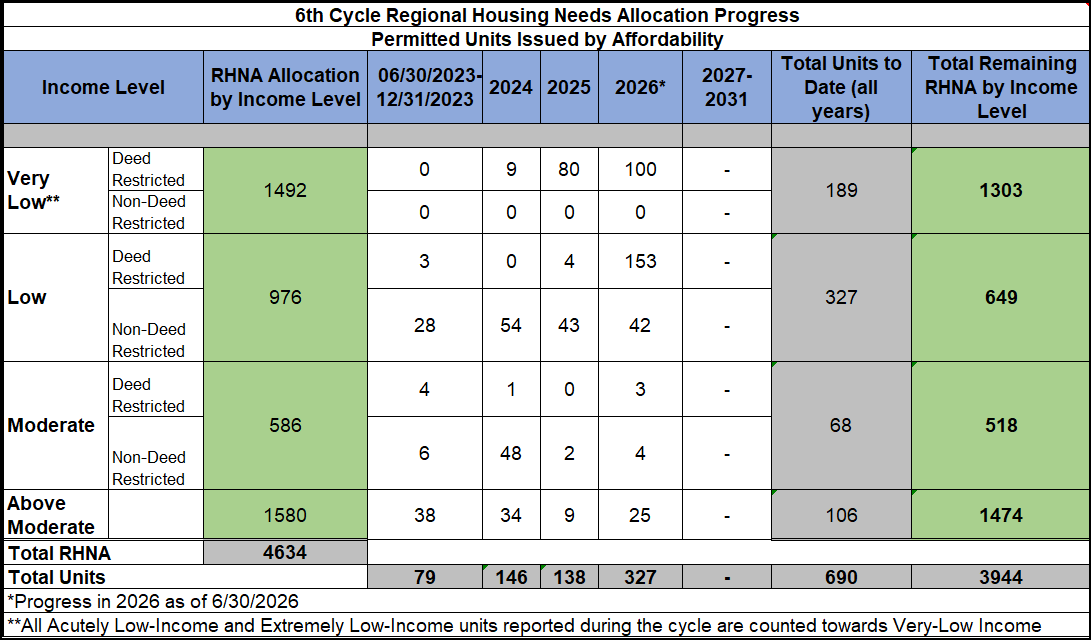
Each year, the County tracks the number of building permits issued against the RHNA. Progress toward the County’s 6th Cycle RHNA is shown in this table:
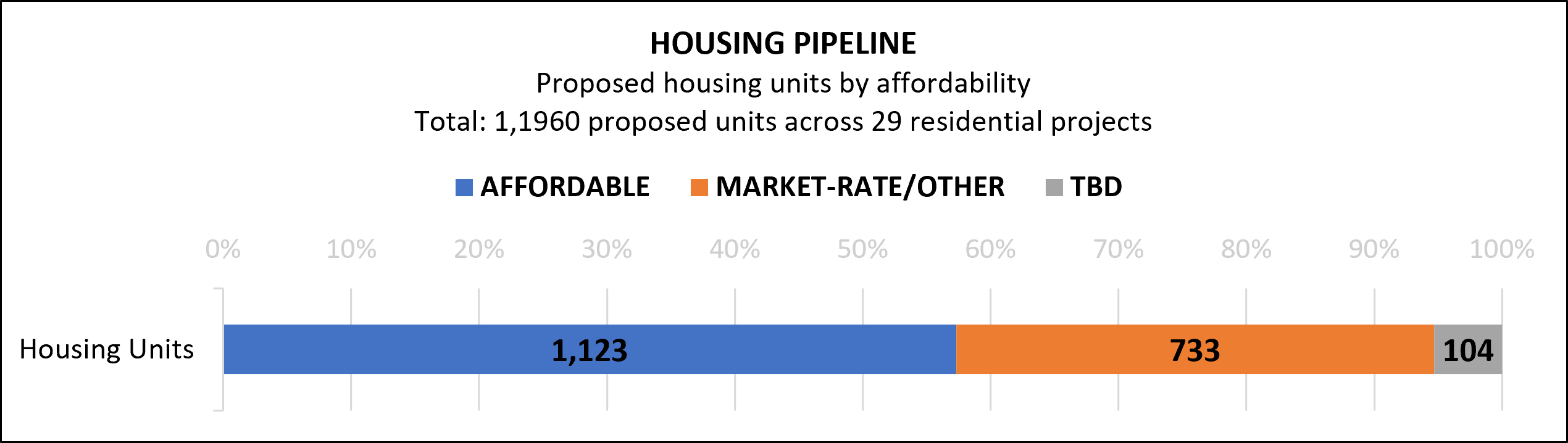
How many housing units are in the County’s pipeline?
Although the number of permits issued is down for the beginning of the 6th Cycle, the County also tracks the developments that are proposed in the unincorporated county. We call proposed housing developments that are in pre-development stages or have made some level of permit application (but don’t have issued permits yet) the “housing pipeline.” Projects in the housing pipeline are expected to be issued permits and included in the RHNA in the future.
Learn more about these projects here: Major Project Applications.
More detail on affordable housing projects
You can also learn more about current and completed affordable housing projects that the County as supported.
Annual Progress Report
Every year, jurisdictions in California must submit an Annual Progress Report on housing production and meeting RHNA goals to the State Department of Housing and Community Development by April 1st. The State tracks all jurisdictions RHNA progress on their APR Dashboard.
Other resources
Growth Goal Report
Housing units vs. population over time